
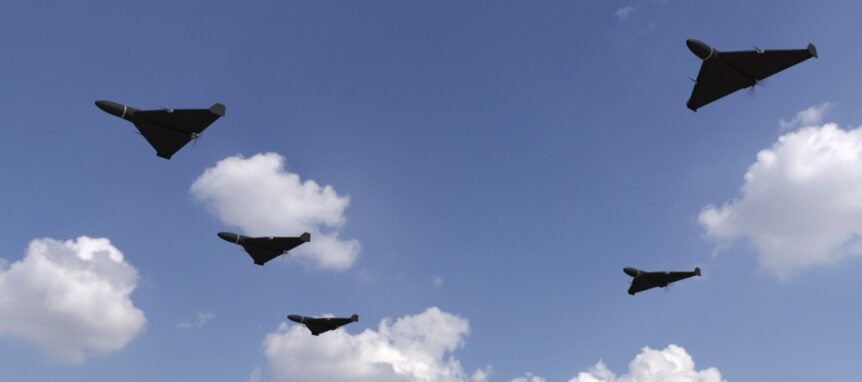
The increasing use of drones in modern warfare is changing the security landscape for civilian contractors working overseas. Recent military conflicts in the Middle East, including operations involving the United States, Israel, and Iran, have demonstrated how unmanned aerial systems can target military installations, logistical infrastructure, and strategic assets with greater precision than ever before. Reports of drone strikes on U.S. military facilities across the Middle East highlight that these threats are no longer limited to traditional combat zones.
For civilian contractors supporting military operations, the rise of drone warfare means new risks that extend beyond the work they perform each day. Contractors working on bases, airfields, ports, and logistics hubs may find themselves exposed to hostile attacks even while carrying out routine job duties.
Drones Have Changed Modern Conflict
Unlike conventional air attacks, drones can be launched quickly, operate over long distances, and strike targets with little warning. Some carry explosives, while others conduct surveillance, gather intelligence, or identify targets for follow-up attacks. .
Because drones are relatively inexpensive compared to traditional aircraft or missiles, they have become an increasingly common tool in regional conflicts. Their growing use has expanded the range of potential threats facing overseas military installations and the civilian workforce that supports them.
Civilian Contractors Often Work at High-Value Locations
Many civilian contractors perform essential work at facilities that are considered strategically important. Airfields, fuel storage areas, maintenance facilities, communication centers, and logistics hubs all play a critical role in military operations.
These same locations may also become targets during periods of heightened conflict. Contractors responsible for aircraft maintenance, cargo operations, engineering, security, communications, and base support often work in close proximity to infrastructure that could be targeted during a drone attack.
The Danger Extends Beyond Direct Strikes
A contractor does not have to be directly struck by a drone to suffer a serious injury. Nearby explosions can create blast overpressure capable of causing concussions, traumatic brain injuries, hearing loss, and damage to internal organs.
Falling debris, collapsing structures, shattered glass, and emergency evacuations also contribute to injury risk. In many cases, contractors are injured while taking cover or responding to alarms rather than from the initial strike itself.
Even a near miss can have lasting physical consequences.
Psychological Injuries Are Increasingly Common
Drone attacks often occur without warning, leaving little time to prepare or respond. The constant possibility of an aerial attack can create significant psychological stress for contractors stationed overseas.
Repeated alerts, shelter-in-place orders, and prolonged periods of uncertainty may contribute to anxiety, sleep disturbances, hypervigilance, and post-traumatic stress disorder. These conditions may develop even when a contractor escapes physical injury.
The cumulative effects of living under constant threat can continue long after deployment ends.
Everyday Operations Become More Hazardous
Heightened security conditions affect nearly every aspect of base operations. Contractors may work longer shifts, relocate equipment, or perform duties under increased operational pressure following drone attacks or intelligence warnings.
These changes can increase fatigue, reduce concentration, and raise the likelihood of workplace accidents involving vehicles, heavy equipment, aircraft, or cargo handling operations.
The danger is not limited to the attack itself. It also includes the demanding conditions that follow.
Medical Evaluation Is Critical
After any drone attack or nearby explosion, contractors should seek medical attention, even if they believe they are uninjured. Blast-related injuries and psychological symptoms may not appear immediately.
Early evaluation can identify concussions, hearing damage, orthopedic injuries, or emotional trauma before symptoms worsen. Prompt medical documentation is also important for establishing a connection between the incident and any future Defense Base Act claim.
Waiting days or weeks to seek treatment can complicate both recovery and the claims process.
Defense Base Act Protection for Drone Attack Injuries
Many civilian contractors working overseas under U.S. government contracts are covered by the Defense Base Act. This law provides workers’ compensation benefits for injuries arising out of overseas employment, including injuries sustained during hostile attacks.
Coverage may include payment for reasonable and necessary medical treatment, disability benefits for lost wages, compensation for permanent impairment, and benefits for qualifying psychological injuries such as PTSD.
Whether an injury is physical or psychological, it may be compensable if it is connected to the contractor’s overseas employment.
Why These Claims May Be Disputed
Insurance carriers may question whether symptoms were caused by a drone attack or whether treatment was necessary. This is especially common in cases involving blast overpressure, hearing loss, traumatic brain injuries, and psychological conditions that are not immediately visible.
Maintaining copies of medical records, incident reports, and documentation showing exposure to the attack can be critical in protecting a contractor’s legal rights.
Understanding the New Reality of Overseas Contracting
Drone warfare has fundamentally changed the nature of modern conflict. Civilian contractors are increasingly working in environments where advanced unmanned systems can threaten military installations with little warning.
Recognizing these evolving risks and responding appropriately after a hostile event can help protect both long-term health and the benefits available under the Defense Base Act.
For more information about Defense Base Act benefits for injuries sustained during drone attacks or other hostile events overseas, contact Barnett, Lerner, Karsen, Zobec, P.A.
Disclaimer: This article is for informational purposes only and does not constitute legal advice. Each Defense Base Act claim is unique. For advice specific to your situation, consult a qualified attorney.