
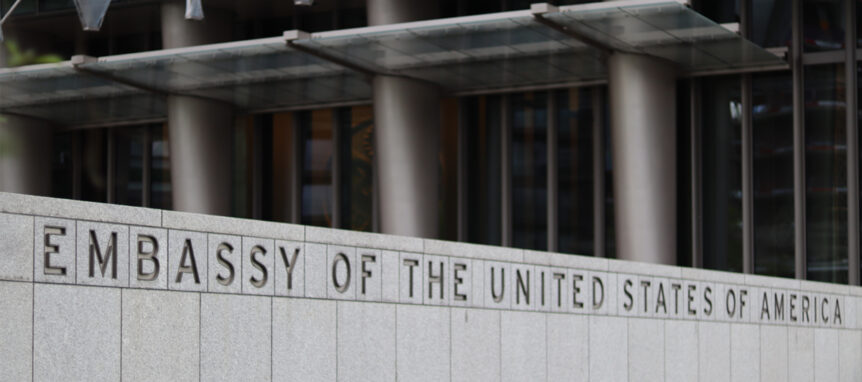
U.S. embassies and diplomatic facilities around the world depend on civilian contractors to maintain safe, functional, and secure operations. These workers perform a wide range of duties, including construction, security, facility maintenance, communications support, transportation, and logistical services.
Although diplomatic facilities are different from military installations, contractors working at these locations may encounter many of the same occupational hazards. Construction accidents, equipment failures, vehicle collisions, security incidents, and other workplace emergencies can result in serious injuries.
When an injury occurs, civilian contractors may wonder whether the Defense Base Act applies to employment at a U.S. embassy or diplomatic facility overseas. The answer depends on the underlying government contract, the nature of the work, and the circumstances surrounding the injury.
Civilian Contractors Support Diplomatic Operations Worldwide
The U.S. Department of State relies on contractors for numerous services at embassies, consulates, and other diplomatic facilities.
These assignments may involve maintaining electrical and mechanical systems, repairing buildings, operating vehicles, installing communications equipment, managing supplies, or supporting facility security.
Some contractors work at established diplomatic compounds, while others participate in the construction or renovation of embassy buildings and related infrastructure.
Depending on the assignment, workers may remain overseas for extended periods or travel between diplomatic facilities in different countries.
Embassy Construction Projects Present Serious Hazards
Constructing or renovating diplomatic facilities can involve extensive structural, electrical, mechanical, and infrastructure work.
Contractors may operate cranes, forklifts, excavators, and other heavy equipment while working around elevated platforms, temporary electrical systems, and unfinished structures.
Falls, equipment accidents, electrical injuries, and falling materials can cause significant harm.
Construction projects may also involve multiple subcontractors performing different tasks simultaneously, increasing the importance of coordination and workplace safety.
Facility Maintenance Can Lead to Workplace Injuries
Established embassies require ongoing maintenance to keep essential systems operational.
Civilian contractors may repair generators, electrical equipment, air conditioning systems, elevators, plumbing, and security infrastructure. These activities can expose workers to electrical hazards, moving machinery, confined spaces, and elevated work areas.
A contractor repairing a rooftop system could suffer a fall, while a technician servicing electrical equipment might experience a serious shock or burn injury.
Even routine maintenance tasks can result in significant injuries when equipment malfunctions or unexpected conditions arise.
Security Contractors Face Additional Risks
Security is an important component of diplomatic operations, particularly in regions experiencing political instability or armed conflict.
Contractors may provide protective services, monitor access points, operate security equipment, or support transportation and security-related logistics.
These assignments can involve risks associated with vehicle accidents, hostile incidents, emergency evacuations, and other dangerous situations.
Contractors may also experience psychological injuries following traumatic events, depending on the circumstances of their employment.
Transportation and Logistics Create Workplace Hazards
Embassies and diplomatic facilities require regular deliveries of equipment, supplies, food, and maintenance materials.
Contractors involved in transportation and logistics may operate trucks, load cargo, move equipment, or travel between facilities.
Vehicle collisions, loading accidents, falls, and injuries involving heavy materials can occur during these operations.
In certain locations, security restrictions or challenging road conditions may create additional transportation hazards.
Does the Defense Base Act Apply to Embassy Contractors?
The Defense Base Act provides workers’ compensation protections to certain civilian employees working outside the United States under qualifying government contracts.
Coverage can extend beyond traditional military installations. Contractors performing construction, alteration, repair, or other qualifying work under U.S. government public works contracts overseas may be covered, including certain projects involving diplomatic facilities.
Certain other government contracts may also fall within the law’s coverage provisions.
However, working at a U.S. embassy does not automatically establish Defense Base Act eligibility. The specific contract, nature of the services, and applicable legal requirements must be evaluated.
State Department Contracts and Insurance Coverage
Many diplomatic facility projects and support operations are administered through the U.S. Department of State.
Qualifying contracts may require Defense Base Act insurance, and responsibility for providing coverage can involve prime contractors and subcontractors.
When a worker is injured, identifying the employer, applicable contract, and insurance carrier may be necessary to determine how a claim should proceed.
Contractors should not assume that every State Department assignment is covered under the same insurance policy or that coverage remains unchanged when contracts are renewed or transferred.
Subcontractors May Also Qualify
Large embassy construction and support projects frequently involve multiple companies.
A prime contractor may oversee the overall project while subcontractors provide electrical work, mechanical services, construction labor, security systems, or other specialized services.
Employees of qualifying subcontractors may also fall within Defense Base Act coverage.
The worker’s direct employer, the relationship between the contracts, and the nature of the overseas assignment can become important when evaluating eligibility.
Injuries During Emergency Situations
Diplomatic facilities may occasionally face emergencies involving fires, security threats, severe weather, or other unexpected events.
Contractors may be injured while responding to alarms, evacuating buildings, securing equipment, or performing emergency repairs.
An injury does not necessarily have to occur during a contractor’s primary assigned task to raise Defense Base Act coverage questions.
The relationship between the incident and the contractor’s covered employment must be examined.
Documentation Is Important After an Injury
Contractors injured while working at an overseas diplomatic facility should promptly report the incident and seek appropriate medical treatment.
Employment agreements, deployment records, contract information, work schedules, incident reports, medical records, and insurance correspondence may all become relevant.
When workers transfer between facilities or employers, records identifying the dates and locations of each assignment can be especially important.
Preserving this information may help establish which employer and insurance carrier were responsible when the injury occurred.
Potential Benefits Under the Defense Base Act
When an injured contractor qualifies for Defense Base Act protection, available benefits may include reasonable and necessary medical treatment and disability compensation when an injury prevents or limits the ability to work.
Certain permanent impairments may also qualify for additional compensation.
Benefits depend on the nature of the injury, its relationship to covered employment, and other applicable legal requirements.
Understanding Your Rights After an Embassy-Related Injury
Civilian contractors are essential to the construction, maintenance, security, and daily operation of U.S. embassies and diplomatic facilities overseas. Although these assignments may not involve direct military support, qualifying employment can still fall within the Defense Base Act.
Determining coverage often requires reviewing the government contract, subcontracting arrangements, work location, and circumstances surrounding the injury.
If you were injured while working at a U.S. embassy, consulate, or diplomatic facility overseas, contact Barnett, Lerner, Karsen, Zobec, P.A. to learn more about your rights and potential Defense Base Act benefits.
Disclaimer: This article is for informational purposes only and does not constitute legal advice. Each Defense Base Act claim is unique. For advice specific to your situation, consult a qualified attorney.